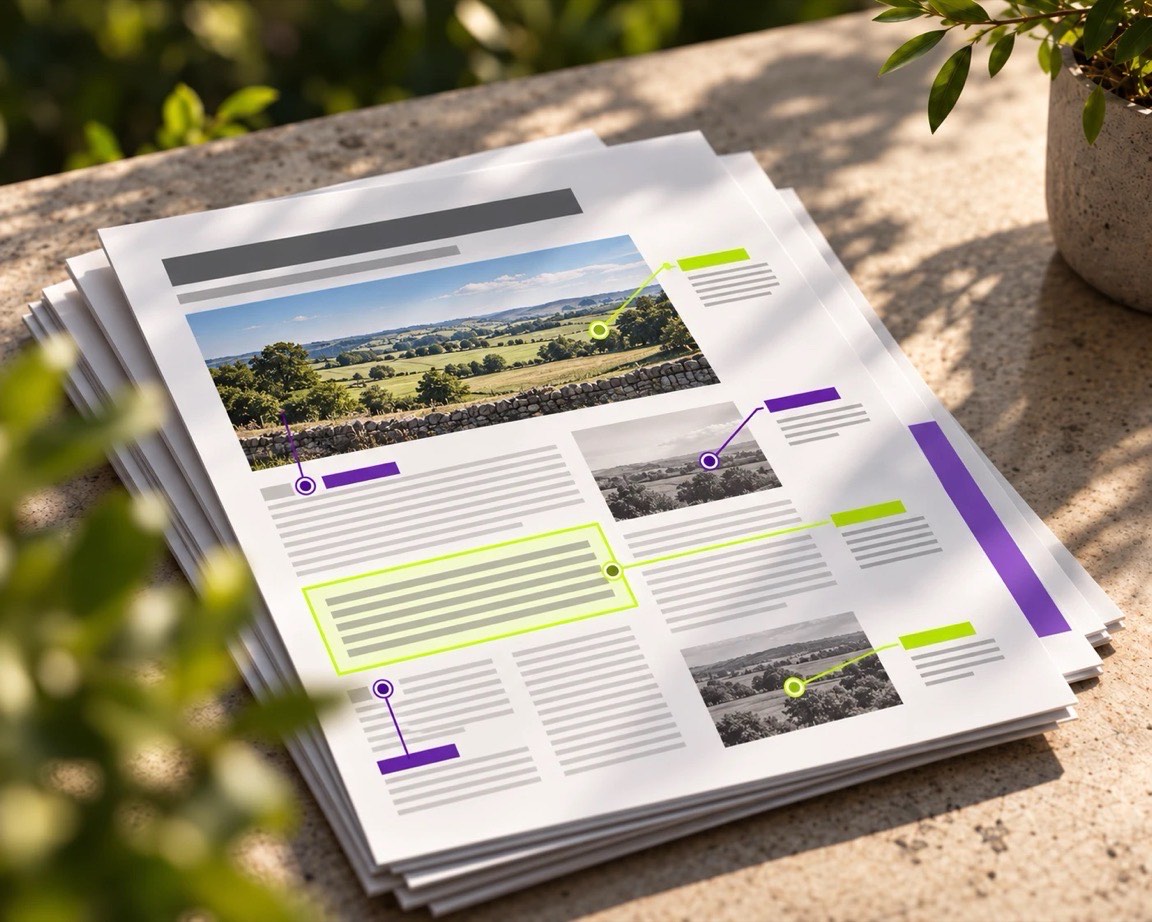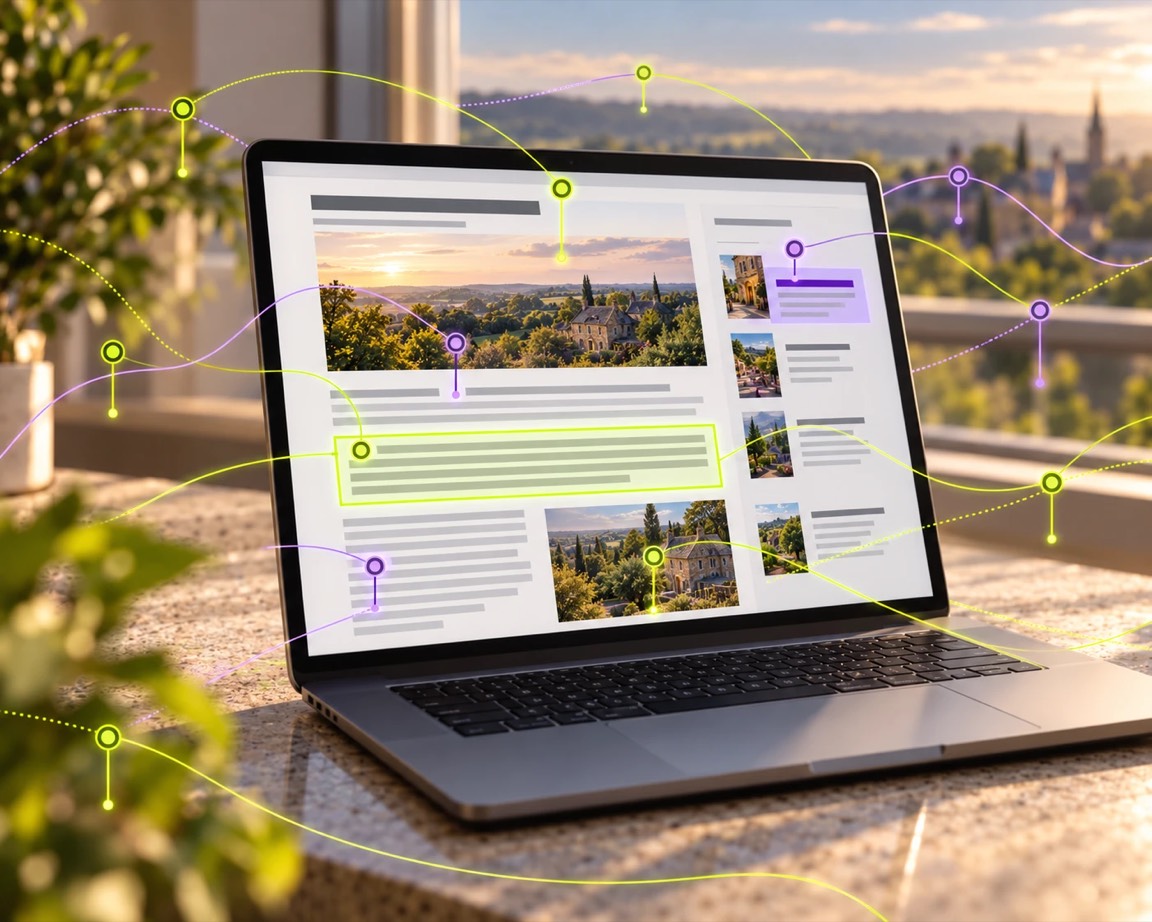
Ask Google a question today and, for a growing share of searches, the first thing on the page is Google’s own answer. A few paragraphs in a box, built from a handful of pages, with the sources listed in small type to the side. The ten blue links are still there, further down. Fewer people reach them.
What changed
For twenty years the job was to be one of the ten links. Now there are two jobs. The first is unchanged: can Google show your page, and does it rank. The second is new: when Google, or ChatGPT, or Perplexity writes an answer, is your page one of the pages it reads and quotes.
They are not the same job. A page can rank third for a search and never be quoted in the answer above it, because the answer was built from two other pages that said the thing more plainly. The reverse happens too. This is why Provley gives every page two scores and never blends them: a strong Google score cannot hide a weak AI score, and vice versa.
A page can rank third for a search and never be quoted in the answer above it, because the answer was built from two other pages that said the thing more plainly.
How the sources get chosen
Nobody outside Google knows the full rule. But the pattern across thousands of kept answers is consistent, and it is the same pattern the other assistants show. An answer prefers pages that state the answer early, give a specific figure with a named source, carry a visible date, and can be read by the crawler at all. It avoids pages that open with three paragraphs of scene-setting, pages whose numbers have no origin, and pages that have not changed since 2021.
Solarvia, our example customer, is a solar installer in Bath that works on listed buildings. In August, one in eleven AI answers to the questions its customers ask named it. By late September it was one in three. Nothing about its ranking had changed. What changed was one page, rewritten so the consent question was answered in the first lines, with the timing stated and the person who stated it named.
The four edits
1. Answer in the first lines
Find the question the page exists to answer, and answer it in the opening sentence or two. The context can follow. An assistant lifts the sentence that answers the question; if that sentence comes third in the paragraph, it lifts someone else’s.
2. Name the source of every figure
“Payback is usually under six years” is a claim. “Payback is under six years, sometimes five and a half, according to our head of engineering, who measured it across 1,400 installations” is a fact an answer can cite, with a name and a date attached. The number did not change. Its usefulness did.
3. Put a date on it
Assistants prefer sources they can tell are current. A visible date near the top of the page, updated when the page is, is the simplest signal there is. A page without one is guessed at, and the guess is usually old.
4. Let the crawlers in
A page that an AI crawler cannot read scores nothing, however good it is. Many sites block them without knowing, through a rule written years ago for a different reason. There are fifteen crawlers that matter, and each can be allowed or blocked in a line. It is the first thing to check, because every other edit depends on it.
What not to do
Do not write a page for the assistant and a page for Google. The same page serves both when it is written plainly. Do not pad a page to a word count; length is not a signal either way. Do not chase a guaranteed citation, because there is no such thing. Any supplier who promises one is promising something they do not control.
Where to start
Pick the ten pages your business most needs to be found for. Check that AI crawlers can read them. Score each one for AI and for Google, separately. Fix the weakest first, with the four edits above. Then ask the assistants the questions your customers ask, once a week, and count how often the answers name you. That count is the number that matters now, and it moves.