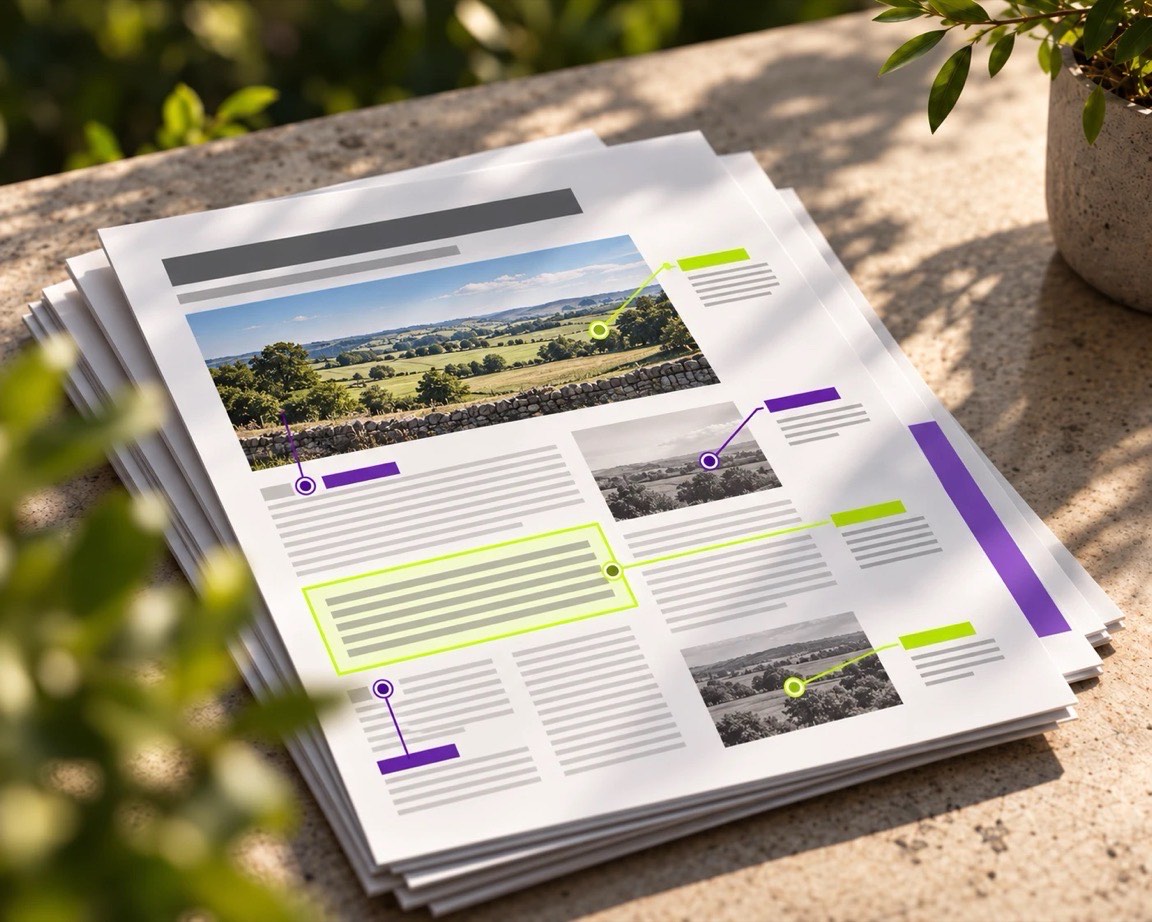
There is a kind of page that does well in both places: Google ranks it, and assistants quote it. There is no trick to it. It is the page that says the useful thing first, backs every number, is signed by someone who knows, and is kept current. The rest of this guide is that sentence, in detail.
One page, two readers
Google reads a page to decide whether to show it. An assistant reads a page to decide whether to use it. The first cares about whether the page can be found and understood: a title that says what it is, headings that map its structure, links that lead somewhere, images that are described, a sitemap that includes it. The second cares about whether the page contains a sentence worth lifting, and whether that sentence can be trusted.
Write for the second reader and the first is mostly satisfied. The opposite is not true, which is why so many pages that rank are never quoted.
Write for the second reader and the first is mostly satisfied. The opposite is not true, which is why so many pages that rank are never quoted.
Principles
Answer first
Every page exists to answer something. Say what, in the first sentence. If a reader stopped after two lines they should have the answer; everything after that is the reasoning.
Every figure has a source
A number without an origin is decoration. A number with a name, a method and a date is evidence. Assistants are built to prefer the second kind, and so are sceptical readers. “Our installations pay back in under six years” becomes citable when it continues “measured by our head of engineering across the systems we fitted between 2019 and 2025”.
Someone signs it
Pages written by nobody read like pages written by nobody. The person in your business who actually knows the subject should be the one whose words appear, with their name and role. This is not about bylines. It is about the sentences being the kind only someone who knows would write.
Date it, and keep it
A visible date, and a page that changes when the facts do. An old page is not penalised for being old; it is passed over for a newer one that says the same thing.
Let it be read
Check that the AI crawlers can reach the page. A rule in your site’s configuration written years ago can block all of them, silently. It is a one-line fix and the first thing to check.
Formats that work
The question page. One question your customers ask, answered in full. The title is the question. The first paragraph is the answer. This is the format assistants quote most, because it matches the shape of what they are asked.
The worked example. One real case, with real figures, and what was learnt. Harder to write and far more useful than a generic guide. Our rooftop solar example is one.
The expert answer. A short piece built from one conversation with the person who knows: their answer kept word for word, then the context around it. This is how Provley writes, and it is the fastest route from knowledge in someone’s head to a page an answer can use.
The area or sector page. Everything a customer in one place, or one trade, would ask, in the order they would ask it. One per place or sector you serve.
What to leave out
Introductions that explain why the topic matters. Word counts hit for their own sake. Keyword repetition, which neither reader rewards any more. Claims about being the leading anything. Anything a competitor could have written word for word.
Measuring it
Two scores per page, kept separate: can Google show it, and would an answer use it. Then the only number that finally matters: when the assistants are asked the questions your customers ask, how often do the answers name you. Count it weekly. Publish, and count again. Pages that move the number get more of them; pages that do not get rewritten or left alone.