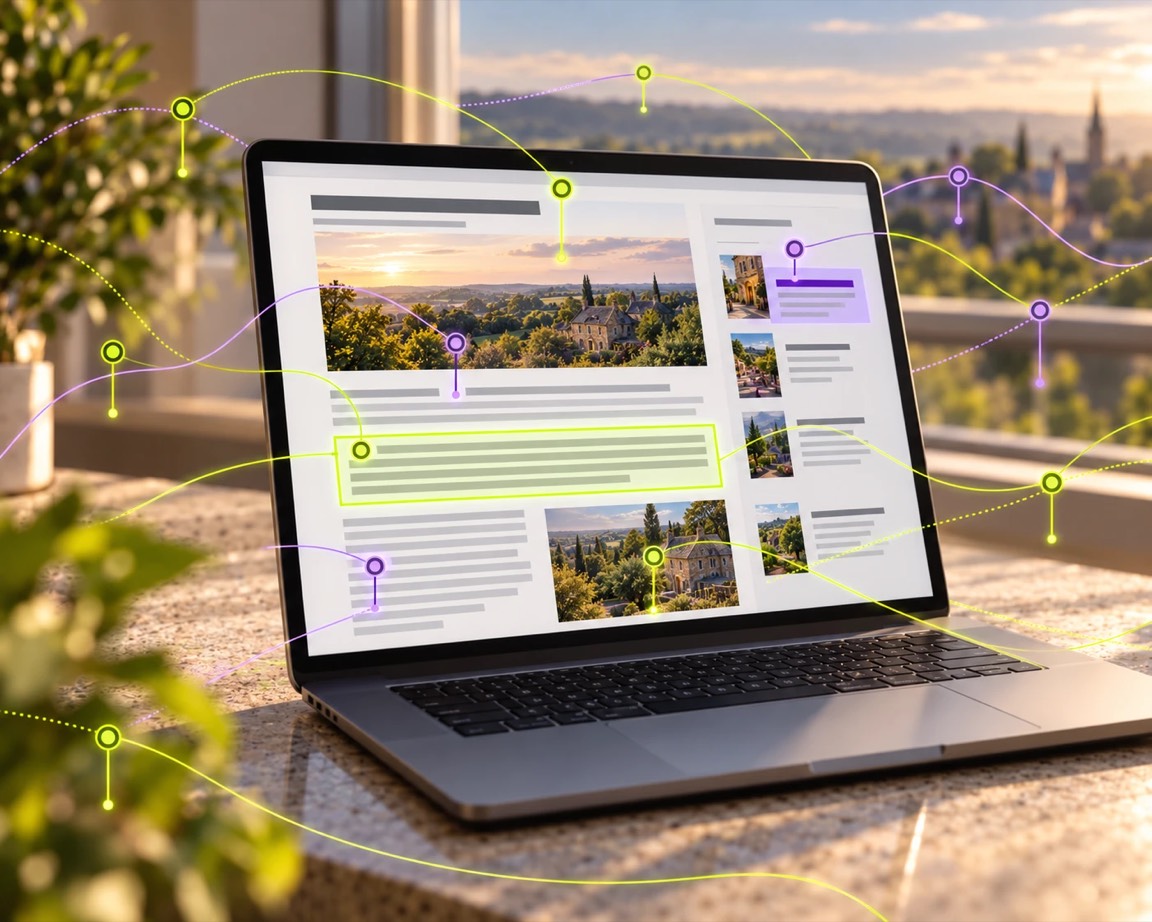
Someone looking for a house in the Cotswolds no longer starts with a portal. They ask. “Is Chipping Campden a good place to live with young children?” “How far is Stow from a mainline station?” “What is a Grade II listing going to mean for a kitchen extension?” The answer comes from an assistant, or from Google’s own answer box, and it is built from a handful of pages. If none of them is yours, the buyer forms their picture of the area, and of who to call, without you.
Why rural homes are different
A city flat is described by its building. A countryside home is described by its place: the village, the school, the road, the walk to the pub, the planning rules that apply to the roof. These are exactly the questions people ask assistants, and exactly the detail most property pages leave out, because portals never asked for it.
That gap is the opportunity. The pages that answer the local questions plainly are the ones an answer will quote, and most agents have not written them.
One well-written area page moves the number more than a hundred listings.
The local detail that gets quoted
For each area you sell in, one page that answers the questions in the order people ask them. Distance and time to the nearest station, by car and on foot, stated as figures. The primary and secondary schools and their catchments. Broadband speed, which in a rural village is a real question with a real answer. The conservation area or listing rules, in a sentence, with who to ask. The flood map. The bus.
Each figure with where it came from and when. “Twelve minutes to Moreton-in-Marsh station by car, measured in September 2026” is a sentence an assistant can use. “Easy access to transport links” is not.
Photographs that say where
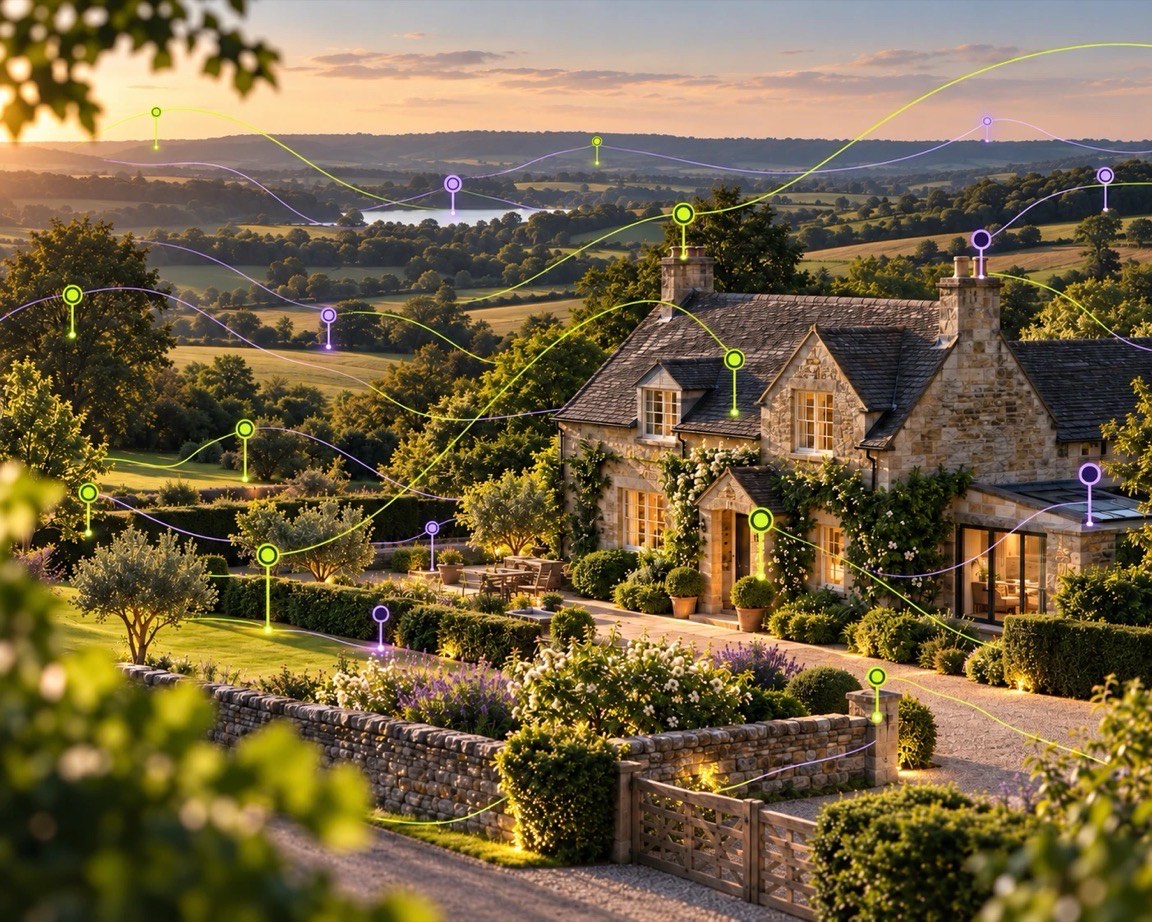
Portal photography shows the house. Place photography shows the house in its setting: the lane, the view from the gate, the village green at the end of the road. Both kinds matter, but it is the second kind that search and AI answers can connect to a place name, provided the file name, the caption and the alt text say where it is. A photograph called IMG_4471 says nothing to anyone.
The listing page itself
Open with the one-sentence answer to “what is this house, and where”. Then the figures that buyers compare: bedrooms, plot, council tax band, energy rating, the year it was built or last renovated. Then the place detail above, or a link to your area page. Put the date the listing went live near the top, and update it when the price changes. A listing page that answers in its first lines is one an assistant can summarise accurately; one that opens with “A rare opportunity to acquire” is one it skips.
Who says it
The agent who has sold in the village for fifteen years knows things no portal does. That knowledge, written down with their name on it, is what makes a page the source rather than a copy. One question by email, answered in their own words, is enough for a page. It does not need to be long. It needs to be theirs.
Checking it works
Ask the assistants the questions your buyers ask, for each area, and see who they name. Then do it again the week after. For most agents the first result is sobering and the second is better, because one well-written area page moves the number more than a hundred listings. Keep every answer so you can read what was said, and so you know which page did the work.